
Archives
-
International Conference on Green and Sustainable Development 2025 - Conference Proceedings
Vol. 1 No. 2 (2025)This issue presents the proceedings of the International Conference on Green and
Sustainable Development, presented at the Serena Hotel, Kigali Rwanda from 10 to 12
March 2025. -
Financial Technology, Banking and Development.
Vol. 2 No. 1 (2026)This issue brings together a collection of scholarly articles that collectively examine the transformative role of financial technology (FinTech), financial management practices, and sustainable development strategies across African and emerging economies. The contributions provide both empirical and theoretical insights into how digital innovation, financial efficiency, and policy frameworks are reshaping financial systems and broader economic development trajectories.
The opening article by Hasyim, Nurrahmawati, and Pudyastuti (pp. 1–8) investigates the integration of artificial intelligence within financial services, with particular emphasis on its impact on operational efficiency in banking institutions. The study highlights how AI-driven FinTech solutions are reducing operating costs and enhancing service delivery, thereby redefining traditional banking models. Complementing this, Abdulmumin and Omotosho (pp. 9–31) extend the discussion to Sub-Saharan Africa, analyzing the relationship between FinTech adoption and the performance of deposit money banks. Their findings underscore the critical role of digital financial innovations in improving profitability, financial inclusion, and competitive advantage in the region.
Focusing on financial management practices, Karinijabo (pp. 32–43) examines the contribution of liquidity management to the financial performance of listed commercial banks in Rwanda. The study demonstrates that effective liquidity strategies are essential for maintaining stability and enhancing profitability within the banking sector. Similarly, Musinguzi (pp. 44–72) explores the macroeconomic dimension by analyzing the effect of terms of trade on Rwanda’s economic development, providing evidence on how external trade dynamics influence national growth outcomes.
At the intersection of finance and enterprise development, Amuzat, Lawal, and Garba (pp. 73–96) assess the role of digital payment solutions in enhancing the performance of small and medium enterprises (SMEs) in Ilorin-South Metropolis. Their work reveals that digital payments significantly improve business efficiency, financial accessibility, and market participation for SMEs, reinforcing the importance of FinTech in grassroots economic development.
Finally, Chauke and Sifiso (pp. 97–150) broaden the scope to sustainability by examining the role of green building technologies within smart city policies in South Africa. The article highlights how environmentally sustainable innovations can be integrated into urban development strategies, contributing to resilient and inclusive cities.
Overall, this issue underscores the interconnectedness of financial technology, institutional performance, and sustainable development. It provides valuable insights for policymakers, researchers, and practitioners seeking to leverage digital innovation and strategic financial management to drive economic growth and sustainability across Africa.
-
Sustainability and Financing
Vol. 2 No. 3 (2026)This issue brings together a diverse collection of empirical studies, systematic reviews, conceptual contributions and applied case studies that collectively examine how financial decisions, responsible management, technological innovation, institutional practices and resilience interact to shape sustainable development.
An important feature of this issue is its geographical and contextual diversity. The studies draw on evidence and perspectives from emerging markets, China, the Philippines, Africa and Rwanda, among other contexts. This diversity enriches the discussion by demonstrating that sustainability and financing challenges manifest differently across institutional, economic and geographical environments, while also revealing common concerns around resilience, innovation, responsible management and inclusive development.
The theme of this issue reflects an increasingly important reality: sustainability and financing can no longer be considered separate domains. Organisations, financial institutions, governments and communities are increasingly required to make decisions that simultaneously address financial performance, environmental responsibility, social wellbeing, technological change and long-term resilience. The articles in this issue provide valuable perspectives on these interconnected challenges across emerging and developed-market contexts.
The contributions in this issue demonstrate that sustainability is multidimensional. It encompasses responsible investment and ESG practices, financial resilience, digital financial services, inclusive finance, international taxation, trade resilience, entrepreneurship, resource efficiency, infrastructure management and stakeholder engagement. Similarly, financing is not merely a mechanism for providing capital; it influences which technologies are adopted, which projects are implemented, how organisations respond to crises, and whether sustainable development objectives can be achieved.
As the world confronts climate change, geopolitical disruptions, technological transformation, financial uncertainty and growing demands for responsible business conduct, there is an urgent need for research that connects financial and managerial decisions with broader development outcomes. JFMS seeks to contribute to this agenda by providing a platform for rigorous research that bridges academic scholarship, professional practice and policy.
-
Special Issue: Sustainable Development
Vol. 1 No. 1 (2025)This special issue aims to explore innovative strategies, policies, and business models that drive sustainable economic growth, corporate social responsibility, and environmental stewardship. This special issue welcomes original research, case studies, and review articles that address key issues related to sustainability in financial and management sciences. Topics of interest include, but are not limited to: Sustainable Finance & Investment; Corporate Sustainability & Governance; Sustainable Supply Chain & Circular Economy; Sustainability in Emerging Markets & Developing Economies and Climate Risk & Resilient Business Models.
-
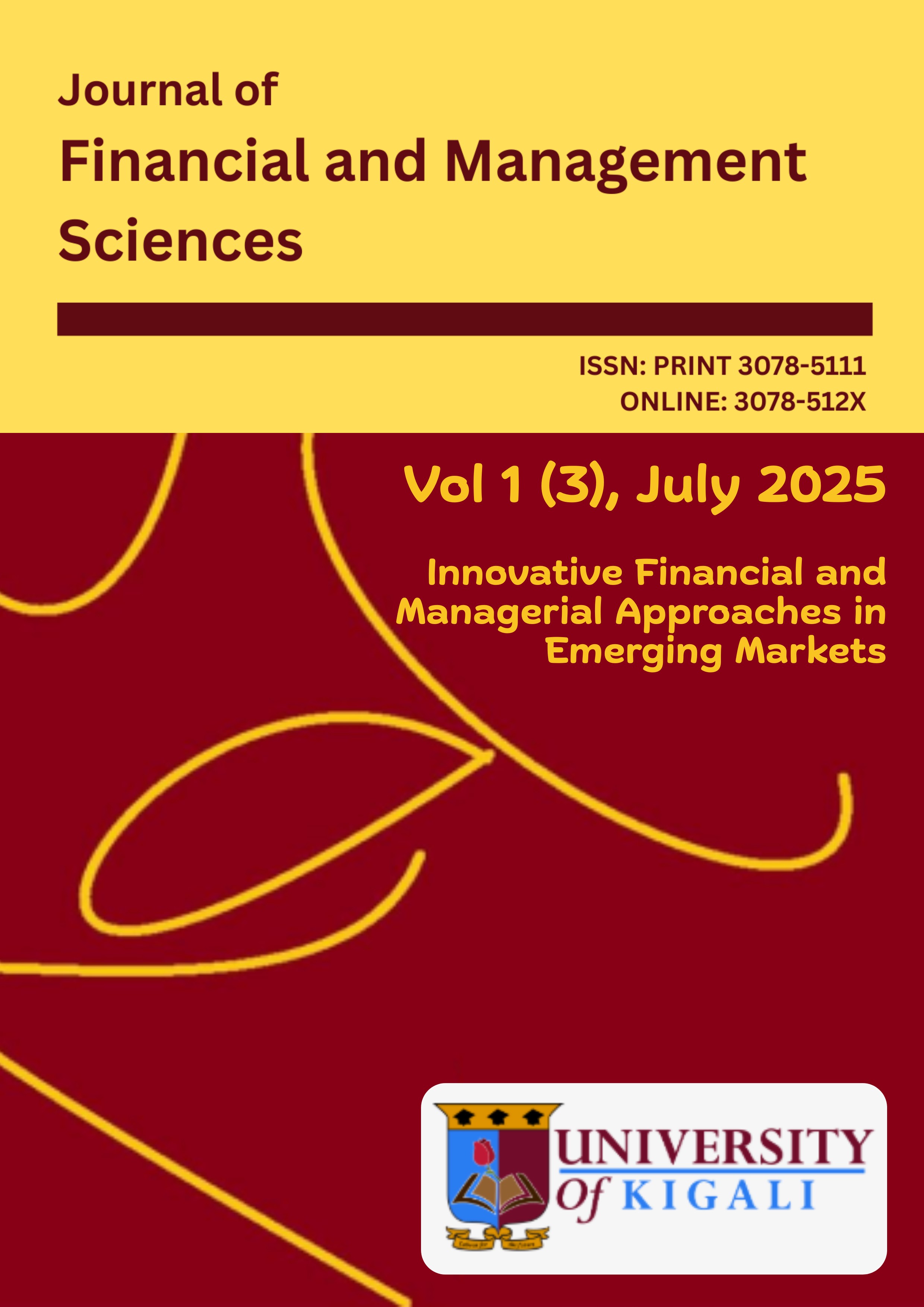
Innovative Financial and Managerial Approaches in Emerging Markets
Vol. 1 No. 3 (2025)This issue of the Journal of Financial and Management Sciences (JFMS) explores groundbreaking financial tools, managerial strategies, and policy innovations that are transforming emerging markets. With a focus on inclusive growth, digital transformation, and sustainability, the articles examine how businesses, governments, and institutions are leveraging innovation to overcome development challenges, enhance competitiveness, and build resilient economies. Contributions span topics such as fintech adoption, ESG integration, circular economy models, and leadership for sustainable development in the Global South.
-
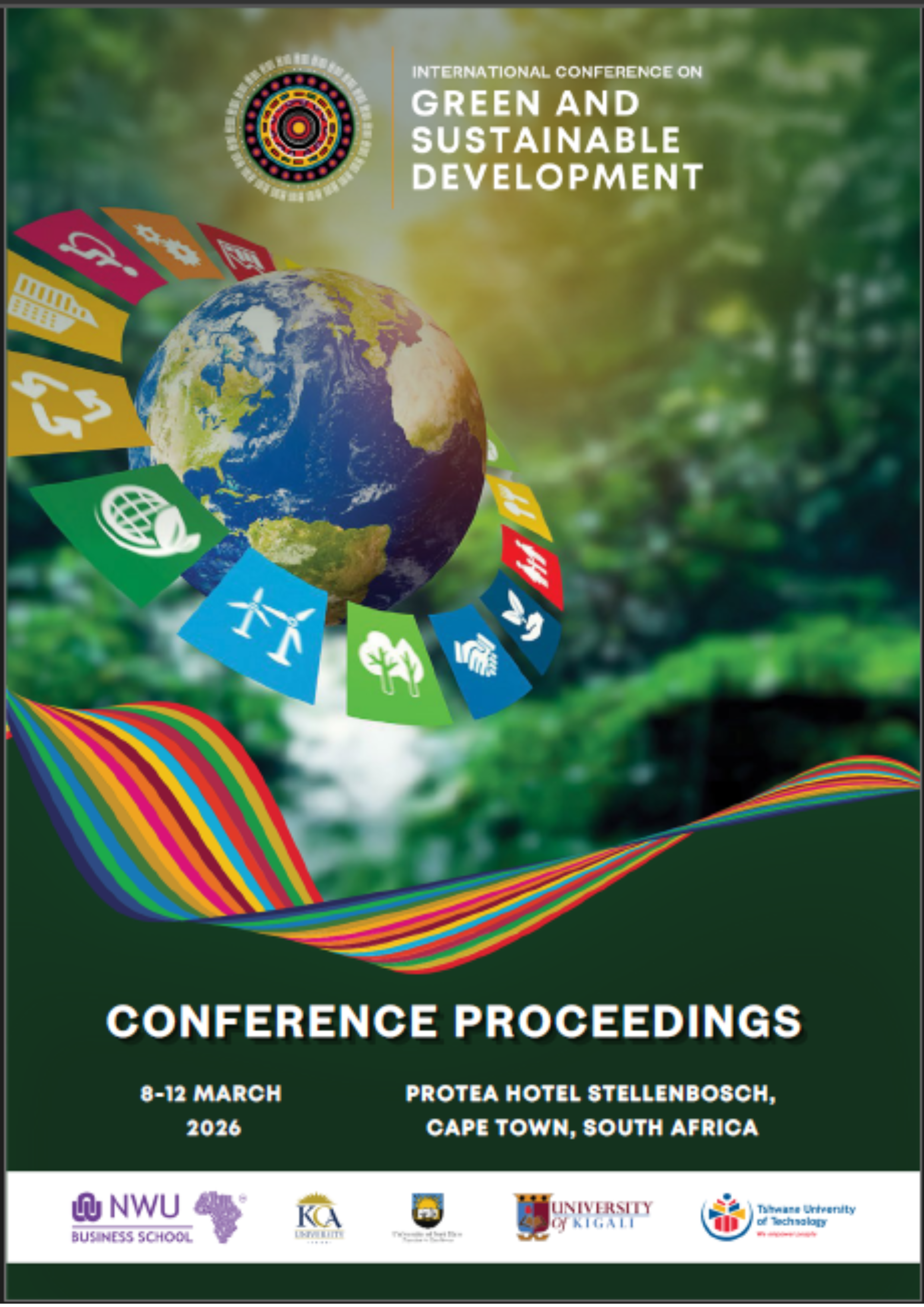
Conference Proceedings: International Conference on Green and Sustainable Development 2026
Vol. 2 No. 2 (2026)This work represents the proceedings of the International Conference on Green and
Sustainable Development, presented at the Protea Hotel Stellenbosch, Cape Town,
South Africa from 8 to 12 March 2026.